
A Definitive Review: Dice of Kalma – Does This Roguelite RPG Roll a Critical Success?









Popular Now
 R.E.P.O
 CarX Street
 God of War Ragnarök
 Candy Crush Saga
 NBA 2K24
 Sonic the Hedgehog™ Classic
 Schedule I
 Counter-Strike 2
 League of Legends
 Minecraft
The Evolving Landscape of Mobile Gaming: Dice of Kalma Enters the Fray
The mobile gaming ecosystem is fiercely competitive, dominated by casual titles and Gacha mechanics. Yet, occasionally, a game emerges that attempts to blend the strategic depth of PC and console experiences with the accessibility of a handheld device. Dice of Kalma, a recent entry into the demanding roguelite RPG genre, is one such title. Developed by a team known for innovative, albeit niche, game design, this title promises a punishing yet rewarding experience built around procedural generation and an intricate dice-based combat system. This comprehensive review dives deep into its core mechanics, monetization model, and long-term viability, addressing the crucial question for serious mobile gamers: is this a worthwhile investment of your time and PREMIUM CURRENCY?
Initial reception has been mixed, a common trajectory for games that prioritize challenging gameplay over immediate gratification. Our analysis focuses on the current state of the game following its V1.2 Major Content Update, which introduced several critical quality-of-life improvements and a significant rebalancing of the ENDGAME PROGRESSION loop. This update is vital, as early versions suffered from perceived unfair difficulty spikes. The developers’ commitment to continuous improvement is a strong indicator of the game’s potential to establish itself within the highly profitable, yet discerning, market segment that values strategic depth over simple spectacle.
Core Mechanics: The Crux of the Dice System and Strategic Depth
At the heart of Dice of Kalma is its titular mechanic: a battle system governed by a set of customizable dice. Unlike traditional turn-based RPGs, where actions are pre-determined or resource-limited, every turn requires a roll of the dice, whose faces determine the available actions—be it an AOE ATTACK, a crucial HEALING SPELL, or a powerful SINGLE-TARGET BURST DAMAGE. This system injects a significant element of RANDOMNESS AND RISK-MANAGEMENT, forcing players to adapt their strategy on the fly rather than adhering to rigid build orders.
The character development system further complements this mechanic. Players do not simply allocate skill points; they acquire and etch permanent modifiers onto their dice faces. This creates a deeply satisfying, albeit RNG-dependent, path to personalization. Key features of the combat system include:
- Dice Customization and Inscription: Players find “Runes” throughout their run, which can replace existing faces on their core dice. Optimizing the probability distribution of faces (e.g., favoring defense vs. offense) is a critical strategic layer.
- “Kalma” System (The Risk-Reward Mechanic): This is the game’s unique take on the “stress” or “corruption” mechanic common in roguelites. Over-reliance on powerful, low-probability rolls generates “Kalma,” which increases the difficulty of subsequent encounters. Managing this meter is essential for MAXIMIZING EFFICIENCY and survival.
- Procedural Generation: Every run is distinct, featuring different dungeon layouts, enemy compositions, and, most importantly, different combinations of available dice faces and equipment. This ensures a high degree of REPLAY VALUE, a core tenet of the roguelite genre.
From a technical perspective, the balance of probabilities requires constant vigilance. The most effective strategies involve ensuring a balanced set of dice that allows for contingency planning. Relying solely on CRITICAL HIT CHANCE faces, for instance, often leads to an abrupt and frustrating end to a run. The steep learning curve ensures that only those committed to understanding the statistical nuances of their loadout will achieve consistent VICTORY CONDITIONS.
Monetization and Value Proposition: Is it Pay-to-Win or Pay-for-Convenience?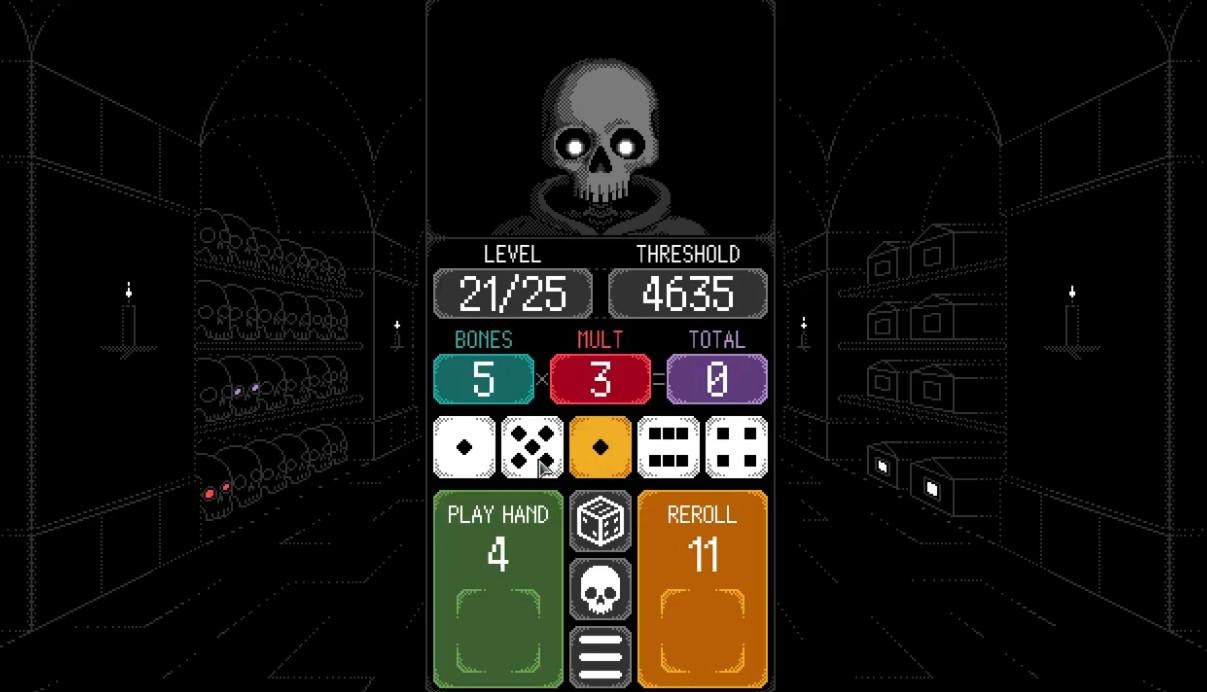
The question of a game’s monetization model is paramount, especially for a mobile title aimed at a core audience. Dice of Kalma employs a dual-currency system, featuring a standard in-game currency earned through runs and a PREMIUM CURRENCY (often referred to in-game as “Aether Shards”) that can be purchased via IN-APP PURCHASES (IAPs). The high COST PER ACQUISITION (CPA) associated with mobile gaming often necessitates such models, but the key is fairness.
Currently, the monetization model leans toward PAY-FOR-CONVENIENCE rather than a detrimental pay-to-win structure. Aether Shards can primarily be used for:
- Cosmetics: Exclusive character skins and dice aesthetics that do not impact gameplay mechanics.
- Quick Start Buffs: Small, temporary boosts at the beginning of a run (e.g., a bonus starting health potion), but these are minor and do not substitute for genuine skill.
- Immediate Access: Speeding up the unlocking of certain persistent upgrades in the meta-progression layer (The Sanctuary), which can also be unlocked through extensive grinding using the standard in-game currency.
Significantly, the game’s most powerful run-specific items and crucial dice face modifications cannot be purchased directly with real money. They must be earned through successful completion of challenging encounters within the run. This preservation of the INTEGRITY OF THE GAMEPLAY LOOP is a major positive. For players seeking a deeper, ad-free experience, the developers also offer a one-time purchase to permanently disable optional video advertisements and provide a minor daily resource bonus, a transaction that offers a high LIFETIME VALUE (LTV) for dedicated players.
Technical Performance, Aesthetics, and Sound Design
Performance on modern mobile devices is exceptionally smooth. The turn-based nature of the combat means demanding real-time rendering is minimal, allowing the developers to focus on aesthetic flair. The visual design adopts a stark, neo-Gothic art style that perfectly complements the game’s oppressive atmosphere and themes of fate and struggle. The user interface (UI) is generally clean, though the dice customization screen can feel slightly overwhelming to new players due to the sheer number of statistical readouts and etching options.
The sound design, particularly the musical score, is noteworthy. It employs a blend of orchestral and synthesized tracks that intensify during boss encounters. This attention to auditory detail successfully reinforces the narrative and emotional weight of the player’s journey. The sound effects accompanying dice rolls and powerful spells provide satisfying TACTILE FEEDBACK that is crucial for engaging the player in a game reliant on randomness.
However, a persistent issue reported by a minority of users involves occasional desyncs during cloud saves, particularly when transitioning between Wi-Fi and mobile data. While the developers have addressed this with the recent V1.2 patch, ensuring DATA INTEGRITY across various devices remains a continuous challenge in the mobile space.
Long-Term Viability and The Meta-Progression Challenge
A roguelite’s longevity is tied to its meta-progression—the systems that persist after a run ends. Dice of Kalma utilizes “The Sanctuary” as its primary hub for permanent upgrades. Resources gathered during runs are spent here to unlock new classes, enhance base starting statistics, and open up new, more complex dice types. This provides a compelling reason to keep playing, even after a catastrophic run.
The latest update introduced the “Covenant System,” a rotating set of weekly challenges with unique modifiers (e.g., “Enemies deal 50% more damage, but you start with an extra defense die”). This mechanic is crucial for maintaining player engagement and preventing the game from becoming stale. The introduction of these highly demanding challenges targets the WHALE SEGMENT and highly dedicated players who have already mastered the core game, providing a continuous challenge necessary for a healthy GAME AS A SERVICE (GAAS) model.
In conclusion, Dice of Kalma is not a casual game. It is a demanding, statistically rich, and deeply engaging roguelite RPG that rewards patience and strategic thinking. While the initial difficulty curve may deter some, those who persevere will find a rewarding experience that masterfully blends the randomness of dice with the calculated precision of an RPG. It earns a strong recommendation for fans of the genre looking for a mobile title with genuine AAA STRATEGIC DEPTH.